Skeletal muscle
The muscle you can see — the frame that keeps you upright, independent, and metabolically young.
Muscular Repair · One of Three
Sedentary muscle
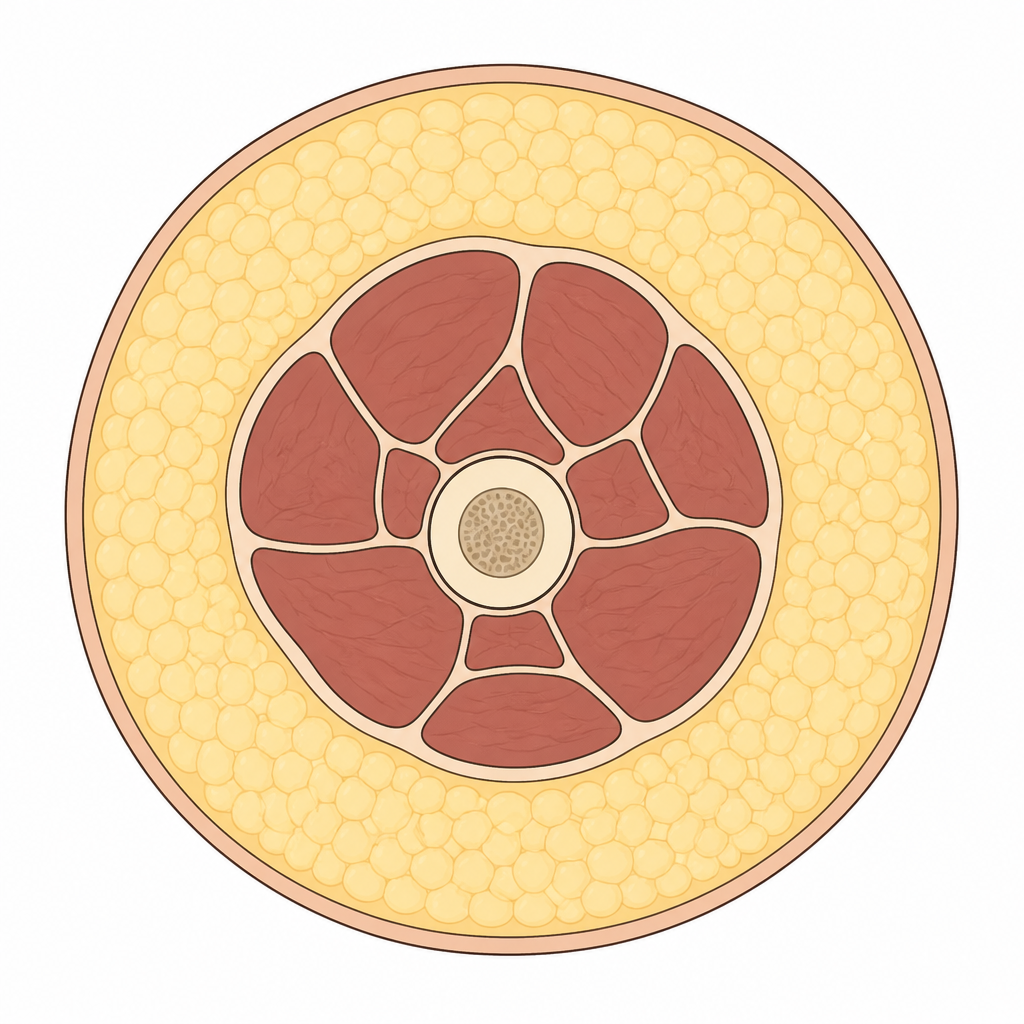
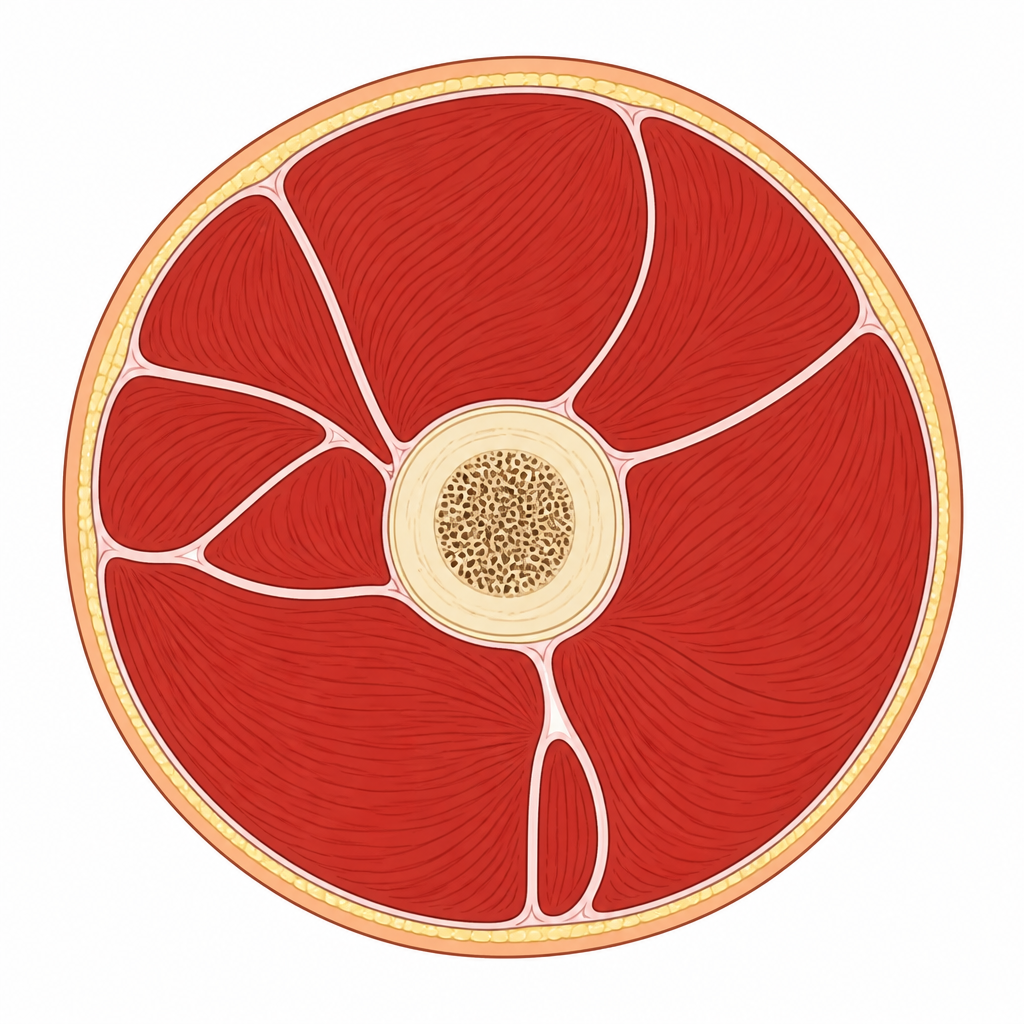
Pale ring = body fat · thin bone
Skeletal muscle is the largest glucose sink in the human body. Every pound of it pulls sugar out of your bloodstream whether you are training or sitting still, which is why losing it quietly raises blood sugar, raises insulin, and pushes fat back toward the belly.
The cross-section above is the part most people have never seen. In a sedentary leg, a thick pale ring of fat surrounds shrunken muscle and a thin bone shaft. In a resistance-trained leg — the same leg, the same person — the fat ring recedes, dense red muscle refills the space, and the bone underneath loads up and thickens.
The critical finding is that this is a disuse pattern, not an aging pattern. Masters athletes in their seventies hold cross-sections that look like people in their forties. Two or three simple resistance sessions a week is the dose. You are not fighting your age; you are reversing a habit.
After Wroblewski et al., The Physician and Sportsmedicine (2011), "Chronic exercise preserves lean muscle mass in masters athletes."