Reflexive muscle
The stabilizers that catch you before your brain knows you're falling — the muscle nobody trains.
Muscular Repair · Three of Three
Standing
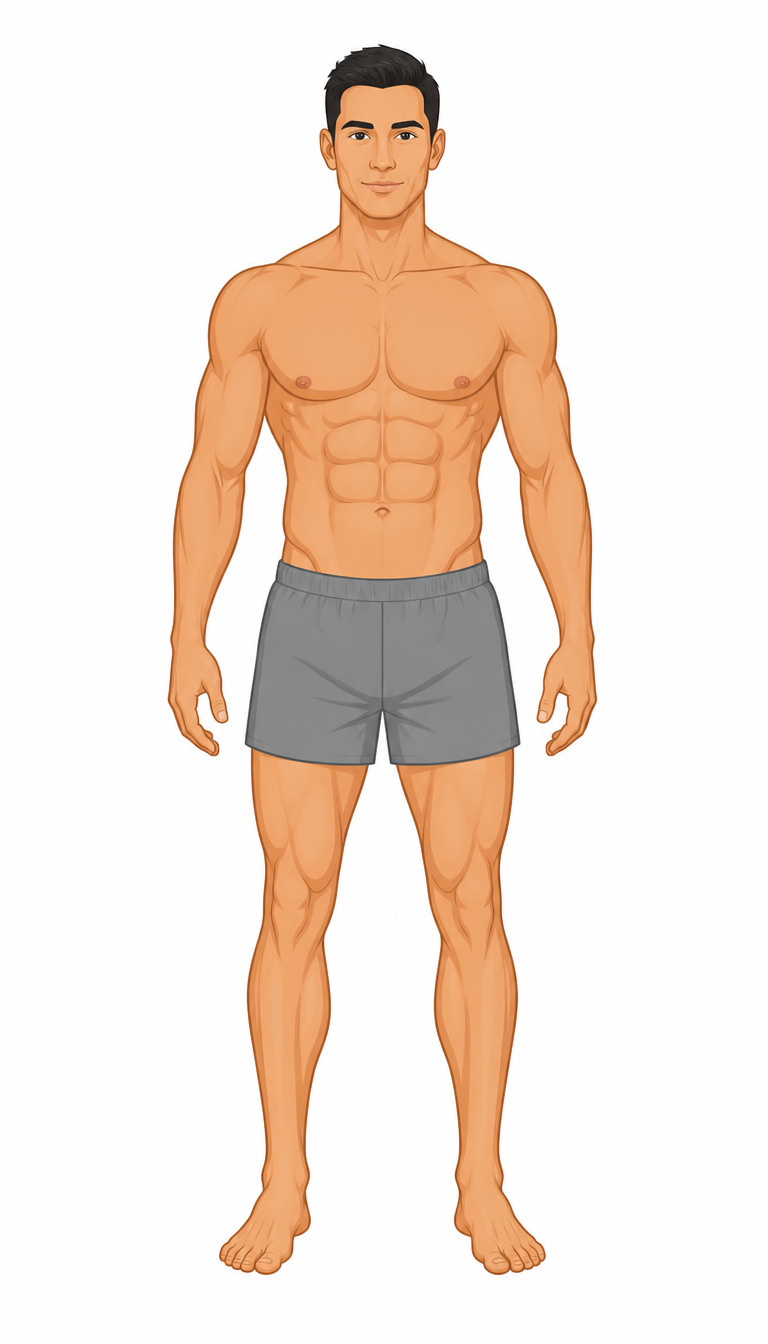
The catch happens before the thought. Train instability, not load.
Reflexive muscle answers to three inputs: your eyes reading the horizon, the stones in your inner ear reading tilt, and the sensors in the soles of your feet reading pressure. Together they fire the stabilizers roughly 120 milliseconds after a slip. You consciously notice the stumble around 400 milliseconds — long after you have already been caught.
When that system fades, you don't feel weak. You feel careful. You take the handrail. You stop stepping off curbs confidently. And that carefulness is the beginning of the fall spiral, which for adults over 65 is one of the leading causes of injury death.
The fix is not load. It is instability — single-leg work, uneven surfaces, eyes-closed balance holds, deliberate reaching. About twelve minutes a day is enough to rebuild the reflex.
After Sharma et al., medRxiv (2025), on perturbation-based balance training (25 RCTs, 2,659 adults 60+; falls reduced 23%), and CDC Older Adult Falls Data (2018–2024).